media

Update: “Self-Plagiarising” Writer Admits to Fabricating Quotes

Jonah Lehrer, the New Yorker columnist I wrote about here in relation to the issue of “self-plagiarism” in writing, has resigned from his position at The New Yorker. According to this story, he was accused of, and has admitted to, fabricating quotes from Bob Dylan – ironically (or maybe not) in Imagine, his book on creativity. Here’s the story with the details of the fabricated quotes.

It will be very interesting to see how this plays out, and whether this discovery is just the tip of the iceberg as to what else might be unreliable in Lehrer’s work. As I discussed in my previous post, I have more of a problem with his inaccurate reporting than with his self-plagiarism. But there’s no question that making stuff up is wrong – and with Lehrer’s high profile and prodigious output, his past work will now be much more closely and critically scrutinized. It looks like Imagine has already been pulled from some sales outlets. I have a feeling that the story isn’t going to end here.
Statistics Canada Cutbacks: The Death of More Evidence

A few weeks ago, Canadian scientists went to Parliament Hill to hold a protest rally that they dubbed “the Death of Evidence“. The speakers at the event outlined the effects of the federal government’s research funding cutbacks. They pointed out that research supported by government funding actually saves money, because it produces reliable evidence that helps government make sound decisions. They also emphasized the difficulty or impossibility of restarting their work if it ends.

My own research isn’t in the “hard” sciences, so the cutbacks protested at the Death of Evidence rally don’t directly harm my work. But my colleagues whose research will be affected are mad and very frustrated, because they know the value of the work they do.
And personally I’m angry about the disrespectful way that these researchers learned they were losing their funding. (more…)

After “The Word”….it’s The Afterword!

I recently wrote about the closure of the very fine British music magazine The Word. Two days ago, the magazine’s website also ceased doing business, although the site is maintaining an archive of all of The Word podcasts (which are well worth listening to).

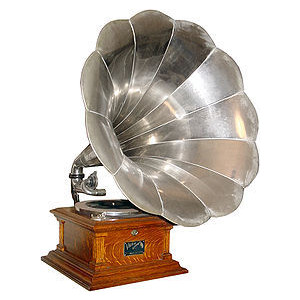
The phonograph is part of The Afterword’s logo. (Credit: Wikipedia)

However, a dedicated group of the Word’s readers and website participants – known collectively as The Word Massive – have decided to attempt to continue the broad cultural coverage, the wit, and the fine writing that made The Word so exceptional. Their website, The Afterword, has just launched, and it’s excellent. It has many of the same features that made The Word website so lively –  and, as demonstrated by this post asking for volunteer moderators,  the volume of activity on the site has been far beyond anyone’s expectations.

The dedication and professionalism that’s evident on The Afterword shows the impact that The Word had on its readers during its nine years in print. It will be interesting to see how The Afterword evolves – other reader-initiated sites, like The Blizzard, have been able to find a niche, and to survive financially, by finding audiences that appreciate good writing and broad-ranging discussion.
Please visit The Afterword and take a look at what’s happening. I think you’ll be impressed.

Misreporting is Worse than ‘Self-Plagiarism’

In the last few weeks, science writer Jonah Lehrer has been under fire in media circles for “self-plagiarism”. A number of investigators have discovered close similarities or identical wording in the texts of articles and speeches he’s written or delivered. However, there’s another aspect of the Lehrer situation that I find more concerning than the allegations of “self-plagiarism” – and that’s the alleged errors in his reporting about scientific research. (more…)

Crowdsourcing for Bands: Now How Much Would You Pay?

The Georgia Straight, a local weekly alternative paper, recently ran an opinion piece by Michael Mann about bands that use crowdsourcing to raise money to subsidize tours or records. The title might give you a clue as to its perspective: “Boo hoo, broke bands, quit asking for charity“. The story generated 425 comments, most of them extremely negative – not too surprising when the article contained statements like this: (more…)

“The Word” Is Closing: Bad News for Good Writing

Despite all the labour relations events over the past week, the news that made the biggest impact on me was the announcement by the British music magazine The Word that it would be ceasing publication with its August issue.

I’ve bought and read music magazines for as long as I can remember – and among my biggest thrills as a writer was having letters to the editor published in the New Musical Express and in Creem.  So I believe that I have the reader experience to say that The Word, over its nine years of existence, was consistently one of the smartest and best written music magazines ever. And when I say “smart”, I don’t mean snarky – I mean intelligent, well-informed, thoughtful and passionate. (more…)

Is Twitter Killing Discussion at Conferences?: Notes from the Field

In my work world right around now, the regular academic year winds up and the rush toward convocation begins. And it’s also the start of conference season. The hard work of getting to conferences started long ago – early January is usually the deadline for submitting papers to summertime conferences. But now it’s time to agonize over your Powerpoints, jump on the plane, and stand up in front of your peers and talk about your research. (more…)

Shut the Tweet Up: Where Social Media Doesn’t Belong

Organizations are being told all the time that they have to use social media to be competitive and responsive. And obviously there have been times when organizations – formal or informal – have used social media to the great benefit of themselves and their society, as in, for example, the Arab Spring uprising. But are there places or organizations where social media doesn’t belong? I think so, because I just went to one. (more…)

Thinking about Success: A Perspective from Skating

It’s been my pleasure over the last couple of months to transcribe interview highlights for the Manleywoman Skatecast, a free podcast created by my fellow adult skater Allison Manley. Allison undertook this venture five years ago out of frustration with “fluffy” coverage of figure skating that focused on “what Johnny Weir ate last week, or what shoes Michelle Kwan is wearing”. To date Allison has interviewed more than 50 people associated with figure skating – and, proudly, has done so only with funding from listener donations. (more…)

No, Really, Are You Happy?: How the Media Misreports Workplace Research

A couple of days ago, while driving around, I heard a news item on a couple of local radio stations saying that fewer than half of all workers are satisfied with their jobs, but were unwilling to look for something else. This caught my ear because something I learned really quickly when I started doing job satisfaction research is that it’s very difficult to measure job satisfaction accurately, and it’s even more difficult to make broad generalizations about it. (more…)