A couple of discussions that I had this week, plus coming across this post, got me thinking about what people end up doing with their university degrees – especially with Ph.D.s. (more…)
creative
Crowdsourcing and Unpaid Workers: When Worlds Collide
A while ago I wrote about crowdsourcing, which is becoming more and more interesting to me as an organizational theorist. Crowdsourcing bypasses traditional organizational structures and processes by creating what organizational theory would likely identify as a “networked organization”, Crowdsourcing creates a network of supporters around an artist or a project, and that organization can be temporary (for a one-time-only project) or ongoing (when the artist calls on those supporters whenever they have something new they want to pursue).
Thanks to the lively minds over at The Afterword, I was recently alerted to a situation that we might call “crowdsourcing gone wrong”. (more…)
Jonah Lehrer’s ‘Imagine’: How Did This Happen?
This past week, I had the opportunity to read Jonah Lehrer’s Imagine – the book that’s part of the controversy about plagiarism and fabrication in Lehrer’s writing. Imagine has been pulled by its publisher as a result of that controversy, so pointing out additional problems with it may now be somewhat redundant. (The copy I read came from my public library.) Nevertheless, after reading it, I want to outline the problems I found with the referencing in the book – an area which other commentators have also raised concerns about. (more…)
The Lehrer Case, Part III: Being Unethical To Be Successful
I’ve written a few posts already about the Jonah Lehrer story – the case of the writer whose self-plagiarism episode blew up into a case of outright fabrication. This story fascinates me because of what it says about how modern media organizations operate, how writing careers work, and more broadly, about another theme that I’ve also touched on before – definitions of “success”. (more…)
Shock of the New: Kate Bush vs. Her Fans?
British singer Kate Bush has had a singular, if not unique, musical career. Her first album came out in 1978, and her most recent album was released last year to excellent reviews. Her career has spanned radical transformations in technology, in the record industry, and in how artists interact with the public. But, as a long-time fan, I’m curious whether the reaction to her participation in the London Olympics closing ceremony marks the point where she might finally have to change her business model.
Update: “Self-Plagiarising” Writer Admits to Fabricating Quotes
Jonah Lehrer, the New Yorker columnist I wrote about here in relation to the issue of “self-plagiarism” in writing, has resigned from his position at The New Yorker. According to this story, he was accused of, and has admitted to, fabricating quotes from Bob Dylan – ironically (or maybe not) in Imagine, his book on creativity. Here’s the story with the details of the fabricated quotes.
It will be very interesting to see how this plays out, and whether this discovery is just the tip of the iceberg as to what else might be unreliable in Lehrer’s work. As I discussed in my previous post, I have more of a problem with his inaccurate reporting than with his self-plagiarism. But there’s no question that making stuff up is wrong – and with Lehrer’s high profile and prodigious output, his past work will now be much more closely and critically scrutinized. It looks like Imagine has already been pulled from some sales outlets. I have a feeling that the story isn’t going to end here.
After “The Word”….it’s The Afterword!
I recently wrote about the closure of the very fine British music magazine The Word. Two days ago, the magazine’s website also ceased doing business, although the site is maintaining an archive of all of The Word podcasts (which are well worth listening to).
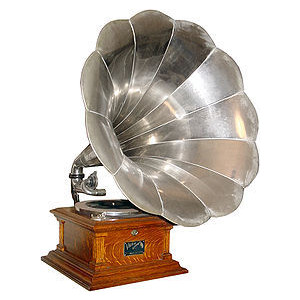
The phonograph is part of The Afterword’s logo. (Credit: Wikipedia)
However, a dedicated group of the Word’s readers and website participants – known collectively as The Word Massive – have decided to attempt to continue the broad cultural coverage, the wit, and the fine writing that made The Word so exceptional. Their website, The Afterword, has just launched, and it’s excellent. It has many of the same features that made The Word website so lively – and, as demonstrated by this post asking for volunteer moderators, the volume of activity on the site has been far beyond anyone’s expectations.
The dedication and professionalism that’s evident on The Afterword shows the impact that The Word had on its readers during its nine years in print. It will be interesting to see how The Afterword evolves – other reader-initiated sites, like The Blizzard, have been able to find a niche, and to survive financially, by finding audiences that appreciate good writing and broad-ranging discussion.
Please visit The Afterword and take a look at what’s happening. I think you’ll be impressed.
Crowdsourcing for Bands: Now How Much Would You Pay?
The Georgia Straight, a local weekly alternative paper, recently ran an opinion piece by Michael Mann about bands that use crowdsourcing to raise money to subsidize tours or records. The title might give you a clue as to its perspective: “Boo hoo, broke bands, quit asking for charity“. The story generated 425 comments, most of them extremely negative – not too surprising when the article contained statements like this: (more…)
“The Word” Is Closing: Bad News for Good Writing
Despite all the labour relations events over the past week, the news that made the biggest impact on me was the announcement by the British music magazine The Word that it would be ceasing publication with its August issue.
I’ve bought and read music magazines for as long as I can remember – and among my biggest thrills as a writer was having letters to the editor published in the New Musical Express and in Creem. So I believe that I have the reader experience to say that The Word, over its nine years of existence, was consistently one of the smartest and best written music magazines ever. And when I say “smart”, I don’t mean snarky – I mean intelligent, well-informed, thoughtful and passionate. (more…)
Business School Research that Might Surprise You: Part 1
I’ve been teaching in university business programs and doing research for more than 20 years, and obviously I enjoy my work or I wouldn’t still be doing it. But I’m always annoyed by misconceptions about the kind of research that goes on in business schools.
A lot of people think business school research is only trying to find better ways for managers to exploit their employees, and/or to reinforce the hierarchical capitalist system. There’s also a common misconception – one that’s often mindlessly spouted by academics in other disciplines – that researchers in business schools just have to ask and their corporate masters will hand over tons of money to support their work. I know I’m not the only person who wishes this were true so they didn’t have to spend so much time writing grant applications. In reality, business school researchers struggle just as much as researchers in any other discipline to get funding for their work.
In this post and its sequel, I’m going to highlight some research from business schools that goes against these misconceptions, either in the choice of research subjects or in the research questions that were investigated – and which, as far as I know, wasn’t funded by any corporation. (more…)
 All About Work