careers

Daniel Pink’s ‘Drive’: A Short Journey on a Tiny Piece of Road

Daniel Pink’s book Drive: The Surprising Truth about What Motivates Us is being mentioned more and more as a good introduction to understanding workplace motivation. I’m not familiar with any of Pink’s other work, some of which has been fiercely criticized. But I was motivated (so to speak) to read this book because I teach about motivation in some of my classes, and some of my research deals with it as well. So I am always interested in what someone has to say about this particular topic.

Drive isn’t a textbook or an academic book. It’s a popular press book, and as such it’s clearly intended as a Malcolm Gladwell-style book – research experiments explained in an understandable way, and useful practical advice based on that research. The spare design of Drive’s cover even mimics the design of the covers of Gladwell’s books, and Pink’s writing follows Gladwell’s style of grandiose declarations and confident assertions. But, unlike Gladwell, Pink accurately describes the research he writes about, and I commend him for that.  I also applaud him for explaining how motivation is both intrinsic and extrinsic (and pointing out that each kind has different effects), and for emphasizing that just throwing money at workers isn’t going to make them work harder. These are realities of motivation that often get ignored and which are always worth talking about.

Unfortunately, though, there’s more wrong with Drive than there is right. (more…)
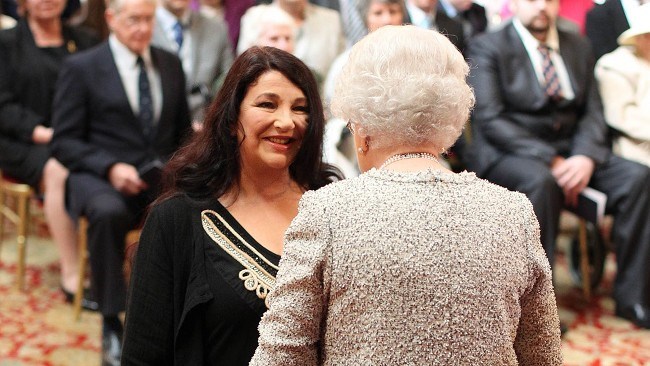
Kate Bush Receives Her CBE

As a huge Kate Bush fan, it delights me to report that yesterday she was officially appointed as a Commander of the British Empire (CBE) for “services to music”. The appointment was announced this past December in the 2013 New Year Honours List, but the actual ceremony was yesterday.

Kate Bush receives her CBE from Queen Elizabeth at Windsor Castle. (photo credit: msn.uk)

Kate Bush receives her CBE from Queen Elizabeth at Windsor Castle. (photo credit: news.uk.msn.com)

Here is her message on her website about the honour, along with a picture of her medal.

Congratulations, Kate!!!

What Being a Professional Really Means

My doctoral dissertation was about workers in semi-professional occupations, and how their identification with their profession’s values affected how they felt about their work. So I’m always fascinated by stories about professionals faced with difficult situations that challenge the values of their chosen occupation.

This article about Geir Lippestad, the Norwegian lawyer who defended mass murderer Anders Breivek, appeared in the Globe and Mail last month. A few weeks later, Doug Christie, a Canadian lawyer who also defended controversial clients, passed away. I’ve been thinking about the contrast between the two and their reasons for doing what they did – and I’m kind of sorry that the article on Lippestad did not get more attention, because to me he represents why professional work is so important. (more…)

Another Critique of Malcolm Gladwell’s “10,000 Hour Rule”

I’m currently reading a very interesting book entitled Selling the Dream: How Hockey Parents and Their Kids are Paying the Price for Our National Obsession. (The “our” is Canada, if you hadn’t already guessed that from the reference to hockey.) If nothing else, this book has made me, as a figure skater, realize that participating in hockey can be almost as expensive as participating in figure skating, especially when parents put their kids into all kinds of additional hockey training and coaching.

However, the part of the book that I found particularly fascinating was its comments on Malcolm Gladwell’s “10,000 hour rule”, which I have criticized in another post(more…)

Academics Behaving Badly: Not Just Irritating, But Also Expensive

Around this time of the academic year, the enthusiasm of last September has been almost completely exhausted. Deadlines for big class projects are fast approaching, everyone is sniffling with a cold or has gigantic lack-of-sleep circles under their eyes (or both), crankiness is running rampant, and the end of the semester seems a looooong way away. So maybe that’s why my eye was caught this past week by two different discussions of academic bad behavior. (more…)

Jacquelyn makes some excellent points in this post about sexist comments in workplaces, and the responsibility of everyone – not just the person the remark was directed at – to counteract the attitudes underlying these kinds of remarks.

Jacquelyn Gill's avatarThe Contemplative Mammoth

You’re enjoying your morning tea, browsing through the daily digest of your main society’s list-serv. Let’s say you’re an ecologist, like me, and so that society is the Ecological Society of America*, and the list-serv is Ecolog-L. Let’s also say that, like me, you’re an early career scientist, a recent graduate student, and your eye is caught by a discussion about advice for graduate students. And then you read this:

“too many young, especially, female, applicants don’t bring much to the table that others don’t already know or that cannot be readily duplicated or that is mostly generalist-oriented.”

I’m not interested in unpacking Clara Jones’ (yes, a woman’s) statement beyond saying that “don’t bring much to the table that others don’t already know” is basically a sexist way of saying that female applicants “are on par with or even slightly exceed others,” which is rather telling in and…

View original post 1,328 more words

Books about Women and Careers: Is This Progress?

This year is the 50th anniversary of the publication of The Feminine Mystique, the revolutionary book by Betty Friedan that made many women in the 1960s realize they weren’t the only ones dissatisfied with their lives and with what society expected of them. (In this excellent interview,  sociologist Stephanie Coontz talks about her book A Strange Stirring which explores how influential The Feminine Mystique was.)

This week I read I Shouldn’t Be Telling You Thisa career book for women written by Kate White, the former editor of Cosmopolitan magazine. (more…)

A great idea from the Intern Labor Rights group.

David Yamada's avatarMinding the Workplace

Who says labor activists can’t deliver a message with a stylish wink? At last week’s New York Fashion Week, members of Intern Labor Rights — an outgrowth of the Occupy Wall Street Arts & Labor group — distributed colorful swag bags to attendees. Tyler McCall, blogging for Fashionista, got one:

Frankly, I was expecting lame pantyhose or maybe chapstick or something when I opened the box. Instead, there was a pin that read “Pay Your Interns” and some folded up literature about why unpaid internships are wrong and how you can get involved in the movement.

Here’s what she found inside:

“The Devil Pays Nada”

The fashion industry, you see, is notorious for using unpaid interns (among other exploited workers) on an international scale. And Fashion Week is a great event for reaching a global audience. Here’s what Intern Labor Rights had to say in announcing their swag bag promotion:

We…

View original post 187 more words

A sad commentary on how regimented supposedly modern workplaces can be.

N80's avatarThe Secret Diary of a Call Centre

Skeleton1

One day, not long after my exit from the call centre, I heard that people arriving for their shift in the morning were greeted by a memo sellotaped to each computer monitor by their manager Peggy, instructing them not to take toilet breaks whilst on-shift.

It was just the latest act in what had been a long running battle in my call centre – A fierce fight over the very right to answer the call of nature. Previous to the sticky-taped missive a number of memos prohibiting the use of the toilet in work time ‘unless an emergency’ had been issued, and subsequently ignored, amid much canteen and car-park whispering of  ‘how dare they.’  Even those among us who would usually be the most docile and compliant members of pro-management staff were up-in-arms. We were unanimously agreed; the right to go when we needed to go was an inalienable one which we…

View original post 895 more words

Making a Living as an Independent Musician: An Interview with Shane Wiebe

I often talk about the music industry when I teach population ecology theory, because the music industry is an almost perfect example of that theory in action. A large group of organizations – the major record companies and retailers – used to set the norm for how things were done, and controlled the allocation of essential resources (money, talent, production and distribution channels) so as to maintain their dominant position. But those organizations felt so secure in their dominance that they chose to ignore new entrants – independent musicians and record companies – that used other resources (the Internet, online sales, new distribution formats, easy-to-use music production software) to establish themselves. And what happened? The organizational field shifted and redefined itself, and the traditional organizations couldn’t adapt quickly enough to survive – as demonstrated by such recent events as the 91-year-old British record store chain HMV struggling with massive financial debt.

I wanted to write a blog entry about how the music industry has radically evolved, even within the past few years. But rather than looking at these developments from outside, I thought it would be more interesting to hear the perspective of an artist who has experienced some of these changes first-hand. (more…)